
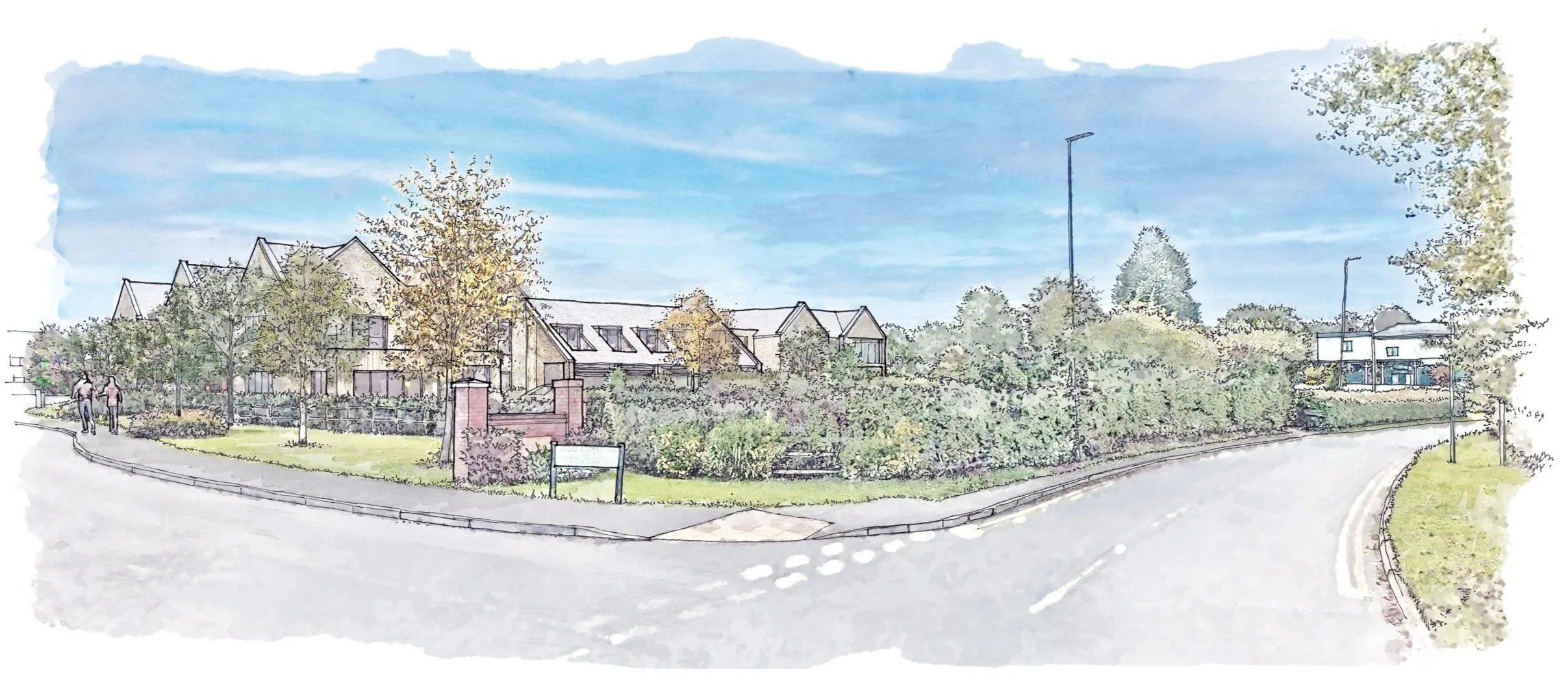
The Proposals
The proposal is for a 64-bedroom residential care home, designed to provide a comfortable and supportive living environment. Ensuite bedrooms, shared communal areas, and easy access to outdoor spaces would be included to create a high quality, welcoming space.
The proposed development is for a new residential care home scheme (Use Class C2) with associated parking, landscaping and other minor associated works. The home will provide residential accommodation for older persons with care support provided to suit the individual needs of residents, such as nursing and dementia care.
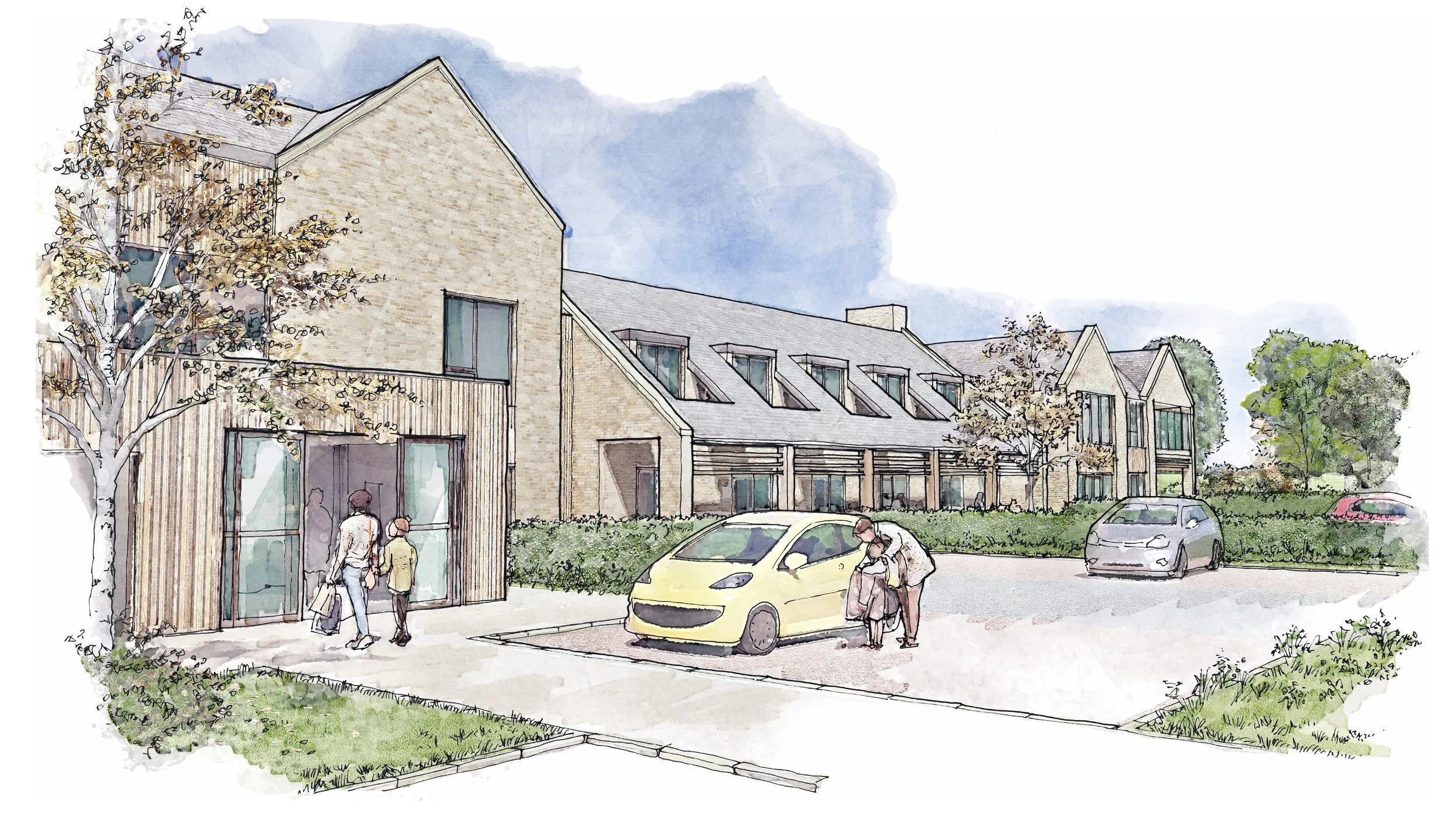
An Artist’s Impression of the proposed care home
Benefits
Making Use of a Currently Underutilised Site within a Sustainable Location - The site is currently under-utilised, surrounded by development and is well connected in Hardwicke with limited constraints. In the draft Stroud Local Plan, the site has also been allocated for residential development, demonstrating the site’s suitability for a proposed care home.

Easy connectivity to the wider area, with the site benefiting from footpaths, cycle routes and easy access to the local bus network with several bus stops in immediate proximity to the proposed home.

Best practice design - Existing trees and vegetation on the site boundary would be retained and enhanced, screening the proposed home. The bespoke proposals will follow best practice design principles, working within the Care Quality Commission framework, delivering high quality, specialist accommodation for the increasing needs of an ageing population. The scheme will be designed to support frail and elderly members of the community with residential, respite and memory care including accommodation for residents living with or developing dementia.

Creating jobs - The scheme would provide employment opportunities for local people, contributing towards the local economy, throughout both the construction and operational phase of the development, with the scheme expected to create approximately 60 full-time equivalent jobs. Typically for care homes the majority of the workforce live in the local area resulting in economic benefits locally, reduced car travel and greater connections with the local community.

Relieving pressure on the NHS -
Prevents hospital admissions: By providing continuous support and on-site care for complex needs, care homes prevent the need for hospital stays, which are costly and can lead to bed-blocking.
Reduces A&E visits: Residents receive the care they need in the care home, avoiding unnecessary visits to Accident and Emergency departments.
Offers proactive, preventative care: The Enhanced Health in Care Homes (EHCH) model ensures care homes are integrated with primary care networks, enabling proactive care planning and early intervention to prevent health issues from worsening.

Release much needed homes - There is an identified need for new housing in Stroud, with the adopted Stroud Local Plan saying there is a further need to identify land for an additional 3,600 homes. The proposed care home has the potential to free up family and larger homes as elderly people are supported to move into a suitable care setting.

High quality design
The scheme has been designed to orientate residents’ rooms to avoid directly looking into the existing housing developments gardens, and instead overlook the proposed gardens and courtyard spaces.
The care home design prioritises green space retention, integrating existing boundaries and vegetation into a cohesive and contextual landscape plan. The care home will be constructed to the latest standards of sustainable design and construction, with the aim of reducing energy consumption utilising a fabric first approach and highly efficient heating and hot water systems.
The parking area has been thoughtfully set back from the road to allow for a more generous landscaped frontage, enhancing the site’s visual character and integration with its surroundings.
Significant changes have been made to the proposals since the first iteration, with the building’s footprint being greatly reduced to create additional green space within the site.
This adjustment not only responds to feedback but also demonstrates a carefully considered design approach, aligning the building line with surrounding development to ensure a more sensitive and integrated relationship with the local context.
The buildings U-shaped form would provide a calm, sun-oriented courtyard at its heart creating space for residents to enjoy.
Wider Site Plan (click to enlarge)
Landscaping and biodiversity
Existing landscape buffers will be retained across the site, to create a nature rich environment. New trees, hedgerows, and soft landscaping will enhance the landscape and deliver at least a 10% biodiversity net gain, ensuring the development contributes positively to the local environment.
Access, highways and parking
A new principal access is proposed from Sellars Road to the north of the site and will provide vehicular, cycle and pedestrian access to the site.
Parking for staff and visitors is provided in a dedicated area to the north of the building, offering a total of 22 spaces, including two designated bays for Blue Badge holders.
Parking is provided for staff and visitors only, as residents will not own cars.
To further support sustainable travel choices, dedicated cycle parking will also be provided for both staff and visitors along with charging spaces for electric vehicles.